· 4 min read
A robot at your exhibition booth: a preparation checklist
A robot at a booth draws a crowd, but a crowd is not yet leads. A checklist to turn visitor attention into business results.
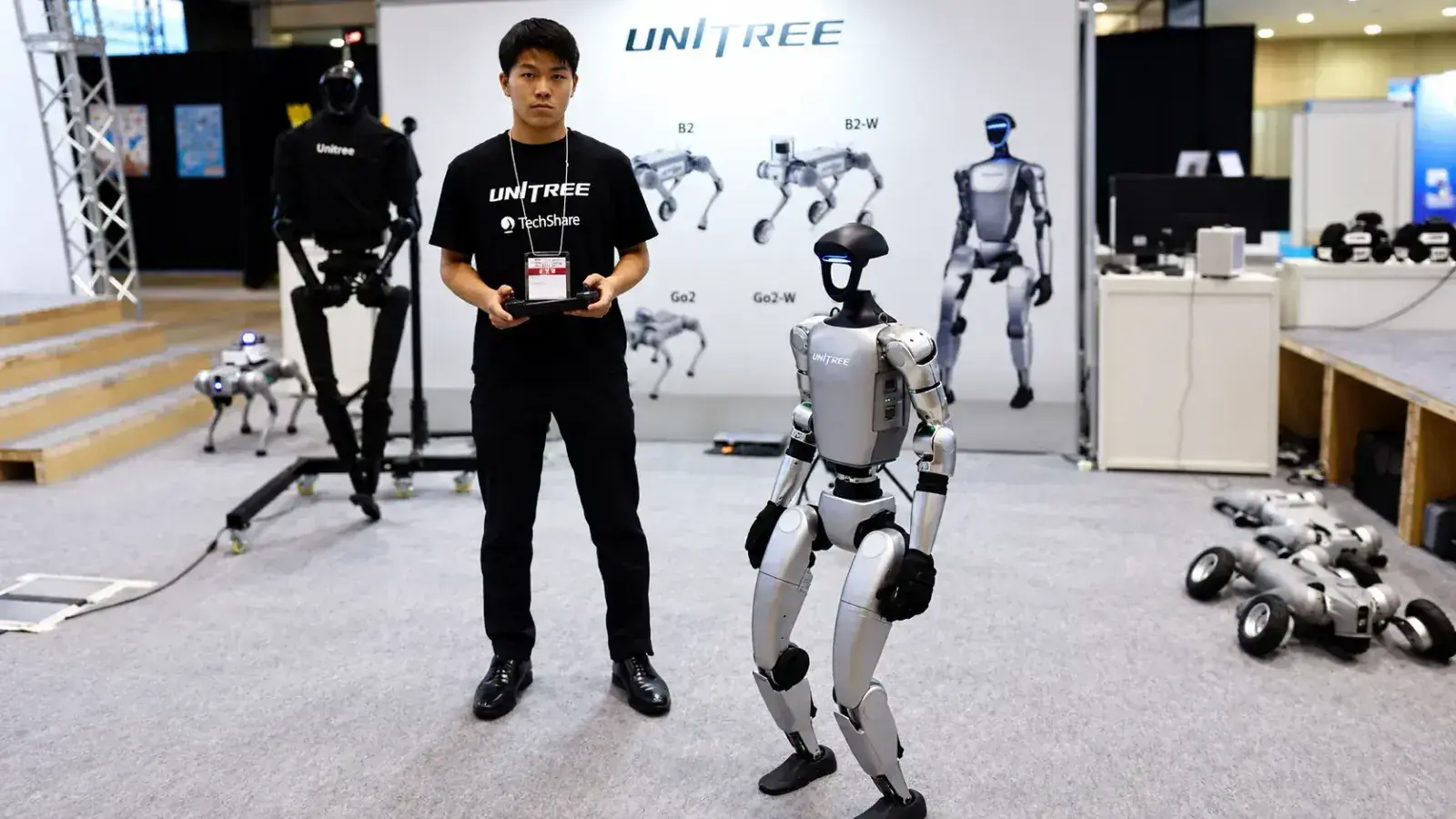
At a large exhibition a visitor walks past hundreds of booths and stops at only a few. A robot is one of the surest ways to make people stop. Attention on its own sells nothing, though: the robot has to lead the visitor further – to a sales manager, a product demo, a form. Below is the checklist we use to prepare robots for exhibitions.
1. Define the goal of the booth
What does a successful exhibition mean for you? The number of contacts collected, demos given, deals signed, social media mentions? The goal defines what the robot will do:
- collect contacts – the robot invites people to take a photo and receive it by email;
- show the product – the robot leads the visitor to the exhibit and briefly presents it;
- boost the brand – the robot performs in branded style on a schedule.
2. Choose the role and the model
For a consultant who talks and gestures, the R1 humanoid fits best. If the booth is large or the hall is noisy, the agile GO2 Pro robot dog works better: it walks along the booth, catches eyes from afar and draws people inside.
3. Check the space and the floor
- A humanoid needs at least 3×3 m, a robot dog at least 4×4 m.
- The floor is level, with no raised platforms or thresholds between booth sections.
- Cables run under the floor or are covered with cable ducts.
- There is a spot where the engineer can stand close by without blocking the robot from visitors.
4. Power and connectivity
The robot charges between sessions, so a separate 220 V socket is needed in the storage room or behind the counter. If the robot answers questions through AI, agree on stable internet with the organiser: exhibition Wi-Fi is often overloaded, so we bring a mobile router.
5. Plan the show schedule
The robot should not work non-stop – it tires both the hardware and the booth team. Short 10-15-minute sessions every hour work best, plus “peak” appearances when the hall is busiest: right after opening, at lunchtime, before closing. Post the schedule on the booth – visitors will come back on purpose.
6. Prepare the lines
At the booth the robot speaks for your company, so the lines must be approved by marketing. We prepare three sets: a greeting, a short product pitch (up to 30 seconds) and answers to the five most common questions. For AI mode we set topic boundaries and forbidden phrases.
7. Decide where the robot leads people
The most common mistake: the robot gathers a crowd and then nothing happens. Agree with the booth team on a clear next step: after the act a manager offers a demo, a promoter hands out a leaflet with a QR code, the photo with the robot is emailed in exchange for a contact.
8. Visitor safety
- Mark the robot’s movement area with tape or a different-coloured mat.
- Brief the staff that children should not enter the area during the act.
- The engineer always has the emergency stop remote at hand.
9. Setup and teardown logistics
Agree on the move-in time with the organiser: the robot needs an hour for unpacking, checks and a test run. After closing – the same for packing. The robot travels in hard cases, so trolley access to the booth is needed.
10. Capture content
Ask the photographer to shoot the robot when the booth is most crowded – such shots work best in reports and on social media. We also share video from our own cameras.
More formats for exhibitions and booths are collected in the Events section.
Splitting roles between people and the robot
The robot does not replace the booth team – it works for it. The best results come from a clear split: the robot catches attention and introduces the visitor to the brand, a promoter picks up the conversation and finds out what they need, a manager runs the detailed consultation. Rehearse the handover from robot to person before the show: the robot’s line “my colleague will show you the product up close” should sound natural.
Also assign someone to manage the queue by the robot. At peak hours dozens of people gather around it, and without a coordinator the crowd blocks the entrance and managers cannot reach visitors who are ready to talk business.
After the exhibition
Process the collected contacts the same day and send people their photo with the robot within 24 hours, while the impression is fresh. It is the simplest way to turn a moment of attention into a conversation about your product.
Getting ready for an exhibition? Send a request with the exhibition name and booth size – we will suggest the robot’s role and a schedule for every day.
Read next
· 4 min read
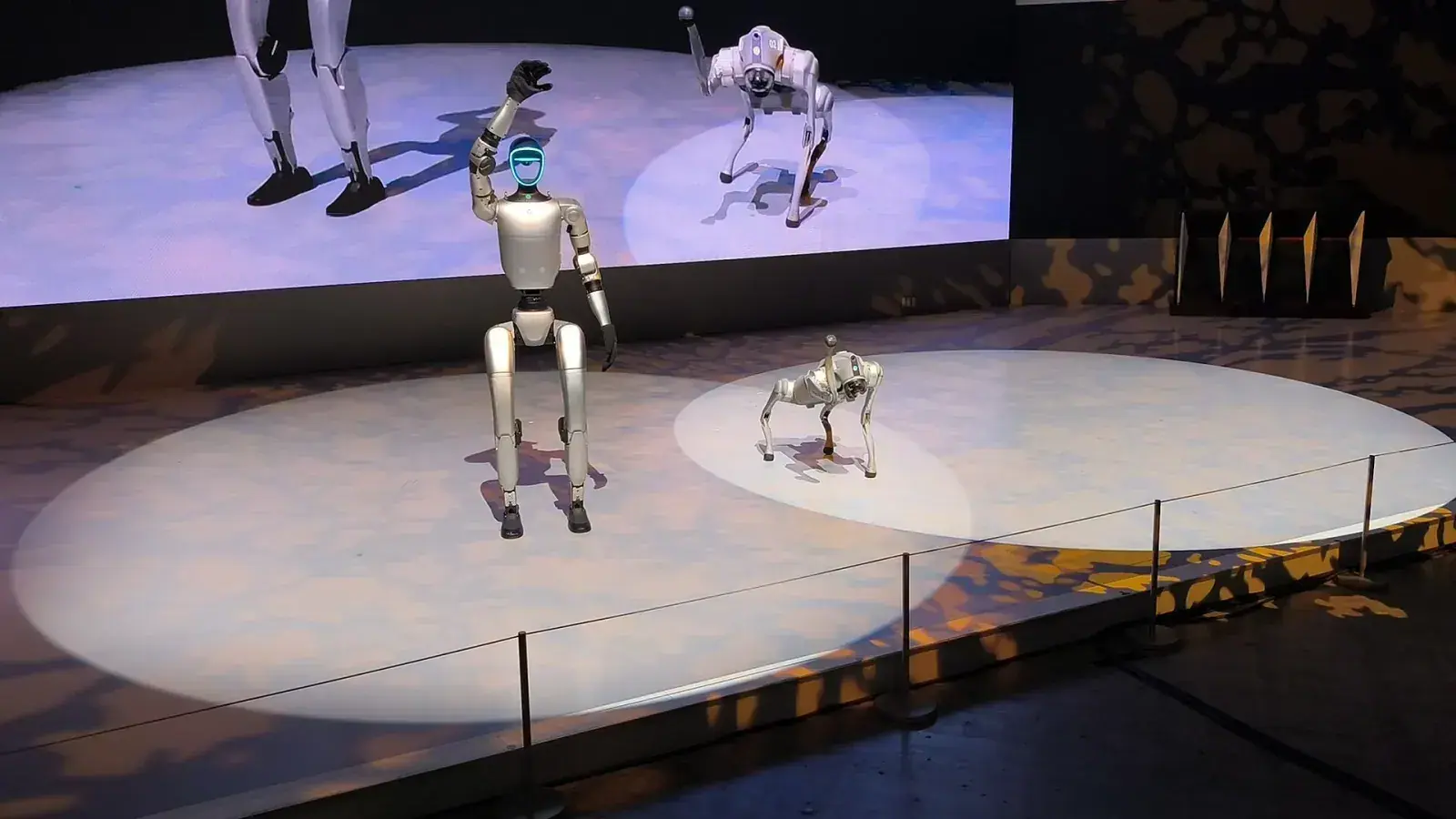
A humanoid robot show: how to build the programme
A good robot show is not “switch it on and watch”. It is an act with a storyline, timing and a backup plan. Here is how we put it together.
Read →
· 3 min read
How much does it cost to invite a robot for an event?
The same model can cost differently at two events. Here is what an estimate is made of and how not to overpay.
Read →
· 3 min read
Temporary or Permanent?: Which is More Beneficial for Business
Inviting a robot closes a one-time event, taking it forever – a recurring task. How to calculate what's more beneficial for you, and what changes when the robot stays with you.
Read →
Planning an event or a robot project?
Tell us about the task – we will suggest a model, a scenario and a format. We reply within one business day.