· 4 min read
A humanoid robot show: how to build the programme
A good robot show is not “switch it on and watch”. It is an act with a storyline, timing and a backup plan. Here is how we put it together.
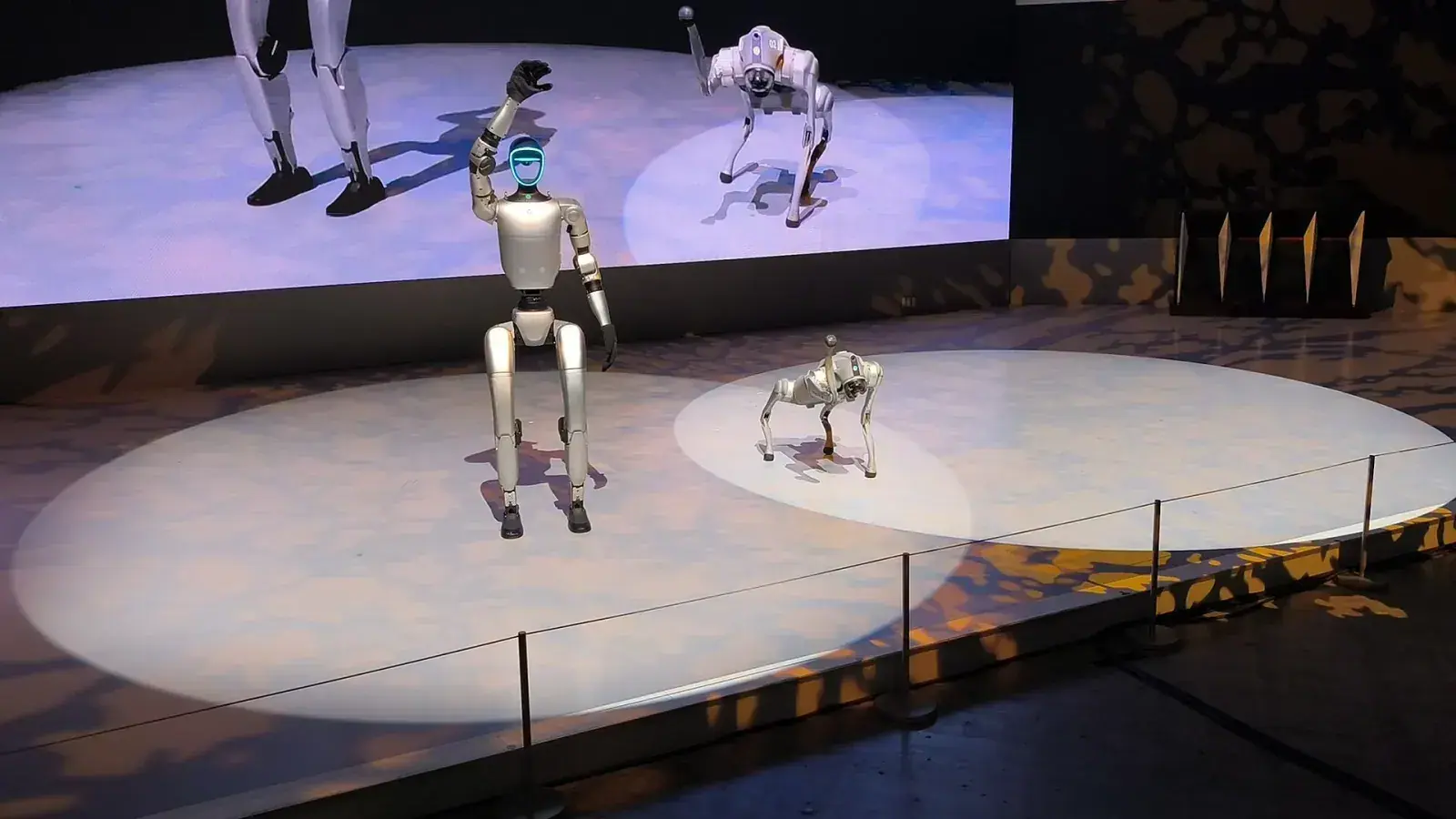
A humanoid robot on stage grabs attention from the very first second. But if the act is not thought through, interest fades just as fast: guests take a photo, go back to their phones, and the robot stands on stage like expensive scenery. To avoid that, we prepare a robot show the way a director prepares any stage act – with a goal, a structure and rehearsals.
Start with the role, not the tricks
The first question we ask a client is: who will the robot be at your event? A co-host who jokes and keeps up a dialogue? A character that “comes to life” at the opening? A symbol of the product being launched? Everything depends on the role: the lines, the movements, the costume, even where the robot stands on stage.
The R1 Basic humanoid is at its best in roles built on gestures and speech: greeting, talking with the host, introducing a speaker. When the programme needs energy – running, jumping, a “dance” among guests – we add a robot dog and the two robots work as a pair.
Structure of the act: three parts
Most of our shows follow a simple scheme.
- Entrance. The robot appears on stage to a music cue or a lighting accent. The first 20–30 seconds are the strongest moment – do not rush them.
- Interaction. A dialogue with the host, addressing the audience, a gesture towards the screen or the product. This is where the robot “works” for your messages.
- Finale. A memorable action: a bow, a dance routine, a photo with the speaker.
The ideal length of one appearance is 5-10 minutes. A longer act tires both the audience and the robot’s battery, so for a packed programme several short appearances at different moments work better.
Lines and voice
A robot that speaks in generic phrases sounds like an exhibition demo. We write lines for the specific event: the company name, the conference topic, a joke about the host city. If live answers to audience questions are needed, we connect an AI assistant but restrict its topic, so the robot never says something you have not approved.
We choose the voice together with you: formal, friendly or playful. It should not clash with the host’s voice – otherwise the audience gets confused about who is speaking.
Timing and a technical rider
The robot performs on the engineer’s commands, so we synchronise the timing with the event director: when the lights go down, when the music starts, on which line of the host the robot steps forward. We put it all in a short rider:
- the size of the stage area and the entrance path (no steps, thresholds or cables);
- a 220 V socket backstage for charging between appearances;
- a spot for the engineer with a clear view of the stage;
- music tracks and a microphone if the robot addresses the audience.
A rehearsal is a must
We run the act twice: in our studio, where we record a video for your approval, and at the venue before the doors open. The second rehearsal reveals things a plan does not show: a slippery stage, bright light that blinds the sensors, loud sound that drowns out a voice command.
Plan B
A live event always carries risks. Every script therefore has a fallback: a shorter version if the programme runs late, remote control if Wi-Fi drops, a finale without a complex move if the floor turns out slippery. The audience never notices – for them the show simply happens.
What the client gets
Besides the act itself, you get content: a video of the performance, photos of the robot with guests, clips for social media. They often work for the brand longer than the event itself.
Want to see the show formats we have already run? Visit robots at events – it collects typical scenarios for conferences, corporate parties and exhibitions.
How to tell if the show worked
Applause is nice but not the only measure. Before the event, agree on what success means for you and how you will count it: social posts with the event hashtag for a conference, visits from a QR code the robot shows in the finale for a product launch, staff feedback after a corporate party.
We also recommend recording the audience, not just the stage: their reactions show which moments worked and which to cut next time. After every show we review such footage with the team and rewrite the weak spots, so the act becomes sharper with each event.
Planning a robot show? Send us a request with the date and format of your event, and we will suggest a role for the robot and a draft script.
Read next
· 4 min read
A robot at your exhibition booth: a preparation checklist
A robot at a booth draws a crowd, but a crowd is not yet leads. A checklist to turn visitor attention into business results.
Read →
· 3 min read
How much does it cost to invite a robot for an event?
The same model can cost differently at two events. Here is what an estimate is made of and how not to overpay.
Read →
· 3 min read
Temporary or Permanent?: Which is More Beneficial for Business
Inviting a robot closes a one-time event, taking it forever – a recurring task. How to calculate what's more beneficial for you, and what changes when the robot stays with you.
Read →
Planning an event or a robot project?
Tell us about the task – we will suggest a model, a scenario and a format. We reply within one business day.