· 3 min read
How to teach a robot to speak for your brand: voice and AI
A robot that answers guests in your words is a strong brand tool. Here is how we set up the voice, the AI assistant and the limits of its answers.
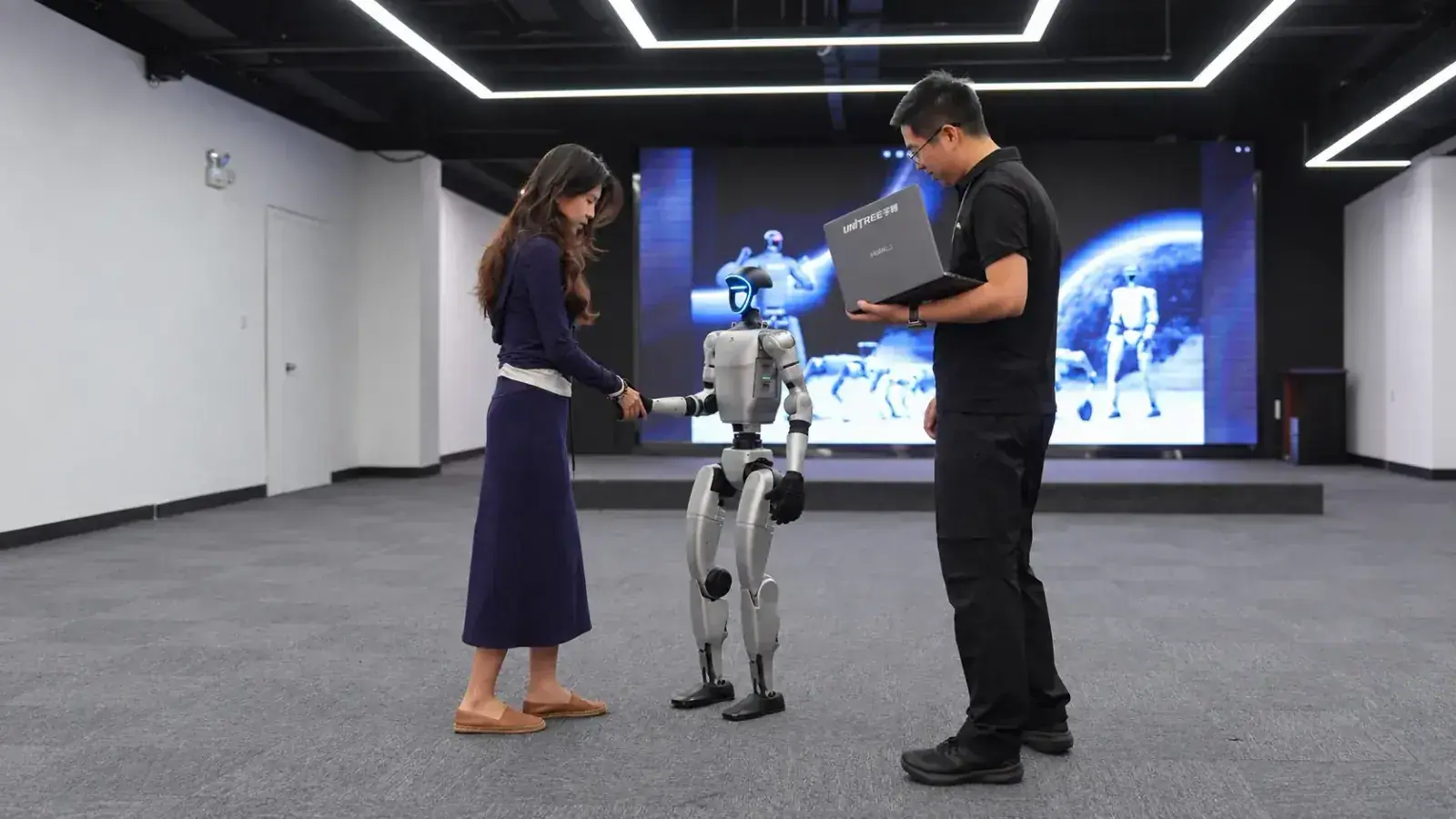
Guests approach a robot with the same expectation: “Does it talk?” If the answer is yes, and the robot speaks about your company in natural language, the effect is many times stronger than any brochure. But a robot that answers off-topic or uses someone else’s words harms the brand. Here is how we set up voice interaction so the robot sounds like part of your team.
Two modes: script and dialogue
Scripted lines are pre-written phrases the robot says on the engineer’s command or on cue. They are ideal for the stage: a greeting, introducing a speaker, a closing line. There is no risk of the robot saying something unapproved.
Dialogue mode means the robot listens to a question and answers through a language model. It is the wow effect for a booth or a photo zone, but also a bigger responsibility: the AI has to be taught to speak for the brand and stay within bounds.
Step 1. Voice and tone
We start with the persona: who should the robot sound like? Restrained and confident for a bank, playful for a kids’ festival, a friendly expert for a tech conference. We pick a synthetic voice, speech rate and manner: formal or casual, with humour or without.
Step 2. Knowledge base
An AI assistant answers with what it knows. Together with you we compile a short base: what the company does, key products, figures that can be shared, contacts for a follow-up conversation. Crucially – only verified information: anything outside the base the robot does not invent but suggests checking with a manager.
Step 3. Topic limits
Visitors will inevitably ask something unexpected: about politics, competitors, personal matters. We set rules:
- topics the robot answers in detail;
- topics it answers with a joke and steers back to the product;
- forbidden topics and phrases;
- answer length – no more than 2–3 sentences so as not to tire the listener.
Step 4. Testing on “awkward” questions
Before the event we run internal testing: several people ask the robot a hundred questions – typical, provocative, with typos, mixed languages and English. Answers we do not like are corrected in the settings. You get the test recordings and can ask to change any answer.
Step 5. Sound at the venue
The best AI is worthless if the robot cannot hear the question. In a loud hall we use an external microphone, a push-to-talk button or short voice commands. On stage the robot speaks through the event’s sound system – we agree on the connection with the sound engineer in advance.
Languages
The robot can speak Ukrainian and English, and at international events switch languages depending on how it is addressed. For each language we prepare a separate verified answer base.
Privacy
We do not keep recordings of visitors’ voices longer than needed to answer, and a sign warns guests that the robot listens to questions. If your company has internal data-processing requirements, we adjust the settings to them.
Where it works best
- a consultant at an exhibition booth;
- a robot guide in a showroom or museum;
- an interactive zone at a conference;
- a product launch with answers to audience questions.
The R1 Basic humanoid suits dialogue best – people naturally talk to a robot with a “face” and gestures. See example roles in the Events section.
How to judge the AI assistant’s quality
After each event we analyse the question log (without personal data): what people asked most, where the robot sounded unsure, which topics came up unexpectedly. Based on that we extend the knowledge base and refine the wording. After two or three events the robot answers noticeably more accurately and naturally.
For companies that buy a robot, we set up simple updates: a marketer can add an answer or change a product price without a developer, so the robot always says what is true today.
Want the robot to speak in your words? Write to us – we will prepare a demo with a voice and answers about your company.
Read next
· 4 min read
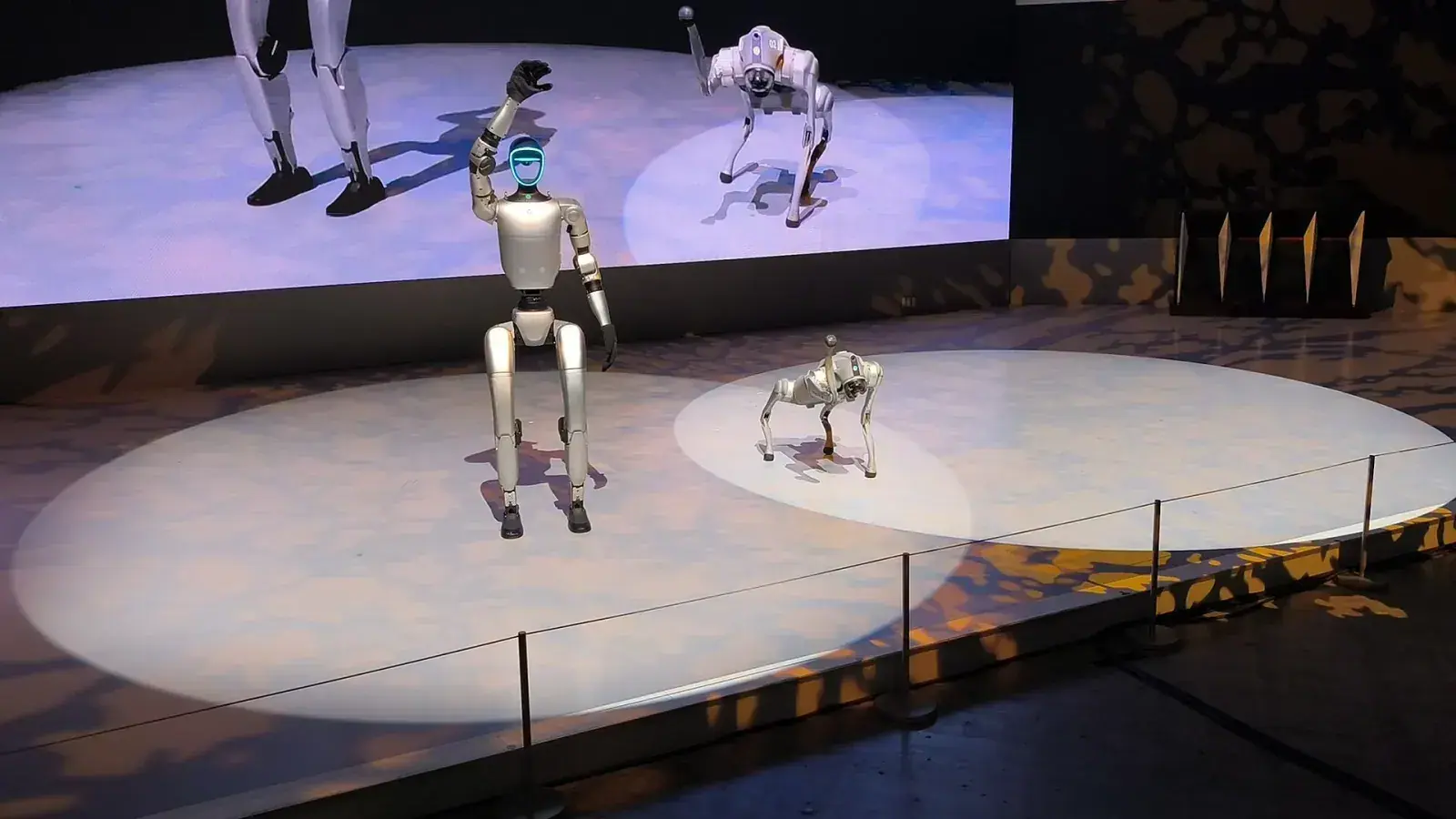
A humanoid robot show: how to build the programme
A good robot show is not “switch it on and watch”. It is an act with a storyline, timing and a backup plan. Here is how we put it together.
Read →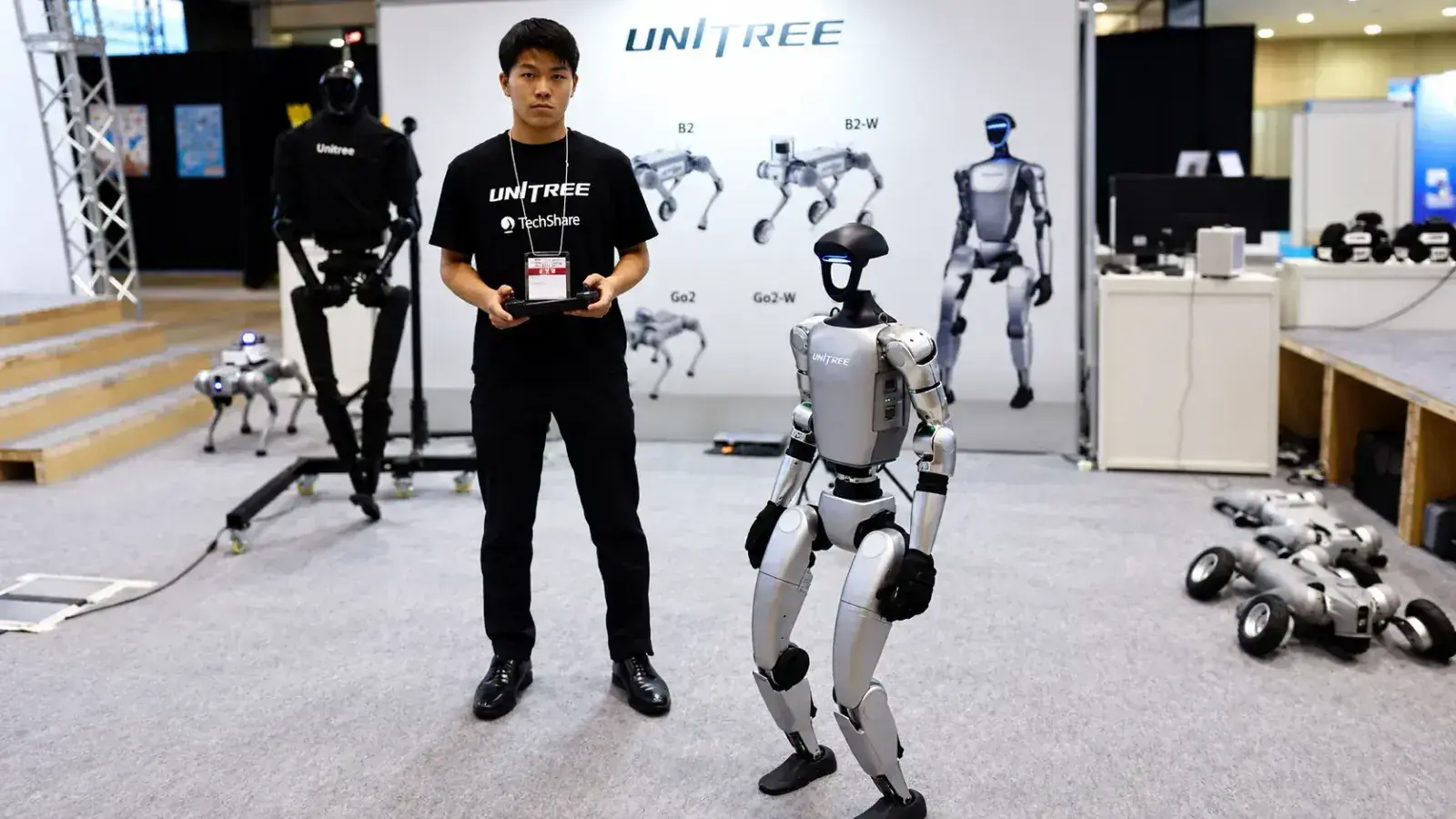
· 4 min read
A robot at your exhibition booth: a preparation checklist
A robot at a booth draws a crowd, but a crowd is not yet leads. A checklist to turn visitor attention into business results.
Read →
· 3 min read
How much does it cost to invite a robot for an event?
The same model can cost differently at two events. Here is what an estimate is made of and how not to overpay.
Read →
Planning an event or a robot project?
Tell us about the task – we will suggest a model, a scenario and a format. We reply within one business day.